






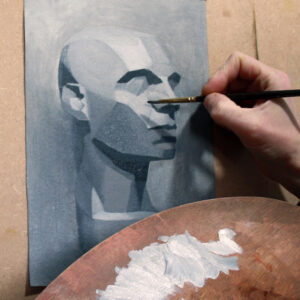


Portrait Painting Workshop: The Flemish Technique

€580.00
Learn how to paint a portrait using the precise multi-layered approach of the Flemish Masters.
5-DAY STUDIO PAINTING WORKSHOP
SUMMER WORKSHOP SERIES 2026
This workshop will be held at the following two venues on the dates listed below:
| OPTION 1 | University College Cork, Cork City |
| Brookfield, College Road, Cork City See on Google Maps | |
| Monday 27th – Friday 31st July 2026 | |
| OPTION 2 | Cahir Arts, Co. Tipperary |
| Castle Street, Parklands, Cahir, Co. Tipperary See on Google Maps | |
| Monday 24th – Friday 28th August 2026 |
| Class Time | 10am – 4.30pm each day, with 1 hour for lunch |
| Class Size | 10 people max. |
| Medium | Oil paint |
| Level | All levels welcome |
| Price | € 580 |
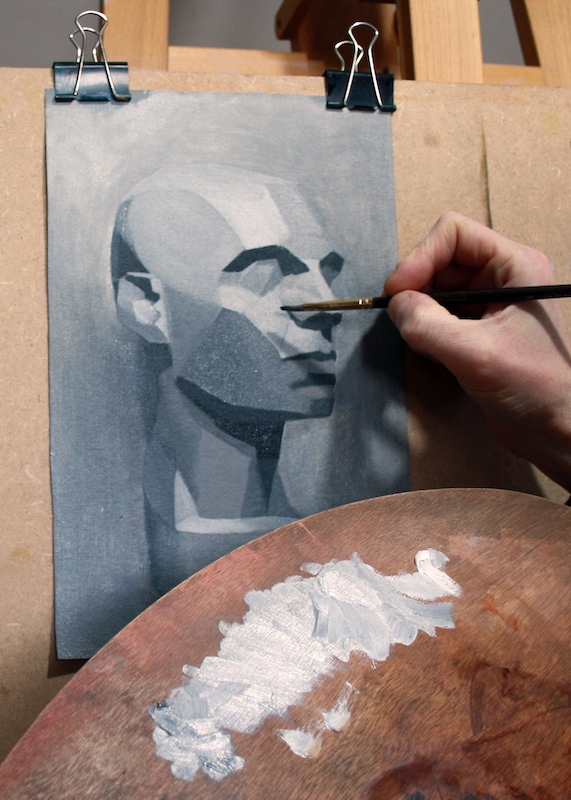
This week-long workshop will show you how to produce original contemporary fine art portraits using the Flemish painting method and associated techniques. The Flemish painting technique involves building the portrait painting in carefully separated, transparent, and opaque layers on a rigid panel, creating rich luminosity, deep shadows, and an incredibly smooth, glass-like finish.
This is a 7-layer painting process, and over the course of the week, you will produce one complete original portrait painting as well as some smaller exercises and studies relating to the portraiture in general.
See daily workshop schedule, what’s included and what to bring, as well as some reviews in the tabbed sections below.
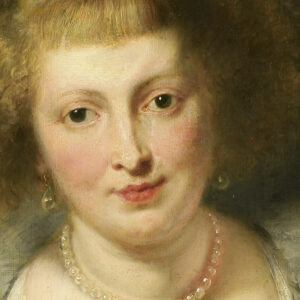
Flemish painting flourished from the early 15th century until the 17th century, gradually becoming distinct from the painting of the rest of the Low Countries, especially the modern Netherlands.
The portraits that were produced prioritise the realistic depiction of three-dimensional form, natural colour and light, achieving likeness of the sitter, and conveying character and mood.
7-Layer Technique
The traditional Flemish approach is a precise, multi-stage process that can take up to seven layers including:
- Preparation
- Drawing
- Imprimatura (or toned ground)
- Umber underlayer
- Grisaille (or “dead layer”)
- Colour glazing
- Detailing, including alla prima elements
- Final highlights
Facial Features
We will look at each individual facial feature: the eye, the nose, the mouth, the ear, and hair, and you will learn how each form is constructed. The structure and anatomy of these features, common painting errors and misjudgements, and lots of practised examples will combine to give you a comprehensive guide.
Measurement, Proportion & Perspective
The more accurate we are in our painting – or true to nature – the more realistic and believable our portrait paintings will be. Developing good measuring skills is therefore essential. Measuring does not just relate to height, width, outline, and proportion; it also includes measuring a cast shadow, for instance, or where the highlight is, which then affects how we interpret the fall of light and the forms of the face and head.
Colour Strategies
We will examine some colour theory and how it can help us choose and organise our palettes and mix colours effectively. A sound understanding of colour and colour mixing will enable you to find the right colour(s) quickly and relatively easily.
Features
Included on this workshop:
- 30 hours of painting instruction
- Live demonstrations
- 20-page workshop ebook
- Digital reference images
Requirements
For this workshop, you will need the following:
- Painting materials and equipment – please download materials list PDF below.
Terms & Conditions
Please read carefully before enrolling and paying for this workshop. By paying for this workshop you are agreeing to the terms and conditions below:
OIL PAINTS
- Oil paints, solvents and mediums (such as mineral spirits, turpentine and linseed oil) will be used on this course, and these have a small and safe degree of toxicity but can emit strong fumes, which may cause headaches, drowsiness and skin irritations.
FEES, CANCELLATIONS & REFUNDS
- Fees are non-refundable and non-transferrable.
- Adrian Cooke Artist reserves the right to cancel this course at any time if the minimum number of students required is not reached. In such cases, your fee will be fully refunded.
- It is recommended that you take out insurance to cover any travel or accommodation costs in the unlikely event that a course or workshop is cancelled.
Reviews
This is just the sort of painting course I have been looking for. Never having had a proper lesson, I have been painting with limited success for more than 30 years. This course provides a very clear methodical approach, good sample pictures for copying, patient explanation and all delivered in a pleasant atmosphere. I highly recommend it.
– Jimmy
As someone who has never painted, I’m finding this course excellent. The class is in a relaxed, friendly atmosphere, and the instruction is second to none. Highly recommended.
– Stuart
Related products


Online Courses


Summer Workshops
Online Courses
Ebooks

Summer Workshops